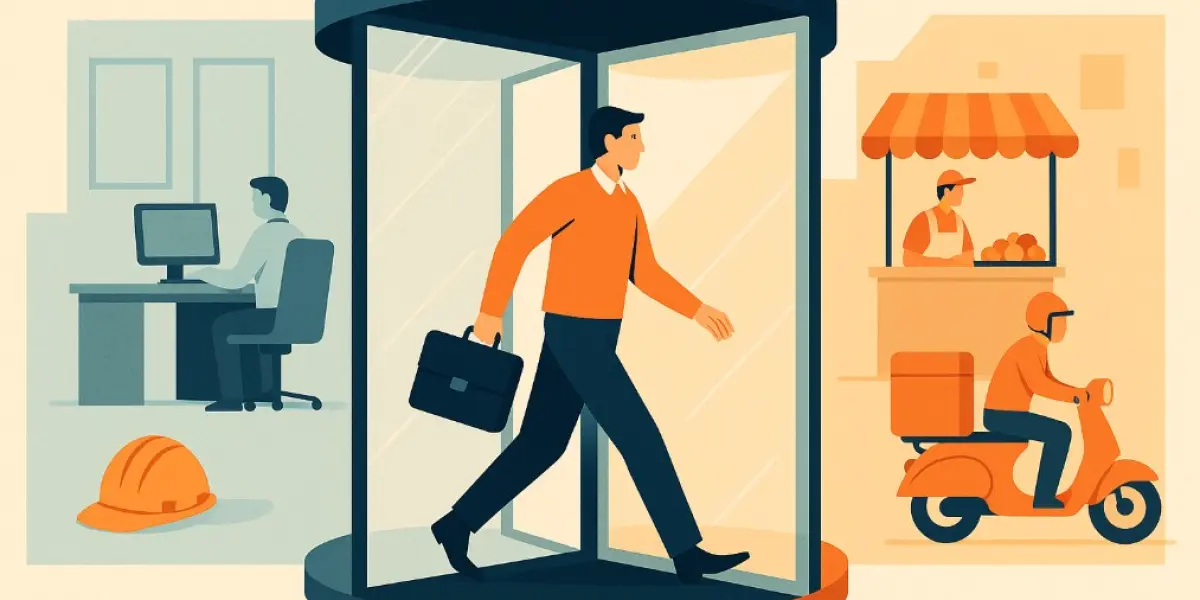
Los colombianos siguen atrapados en una puerta giratoria entre la formalidad y la informalidad laboral
El mercado laboral y su alta informalidad generan grandes retos al sistema pensional. Foto: Imagen generada con Inteligencia Artificial - ChatGPT
TL;DR
- Colombia's job market is marked by a constant shift between formal and informal employment, hindering true economic stability for many.
- Recent data shows a reduction in unemployment, but job quality remains fragile, with self-employment and informality dominating job creation.
- A significant portion of new jobs are self-employment, offering no guaranteed stability, constant income, or regular pension contributions.
- This 'revolving door' between formality and informality negatively impacts household economic security.
- Over 70% of the more than 700,000 jobs created are self-employment, lacking continuity in social security contributions.
- Female underemployment is highlighted, with women facing greater care burdens and engaging in informal or low-paying jobs, deepening gender gaps.
- Permanent interruptions in employment directly affect the pension system, making it difficult to accumulate sufficient contribution weeks.
- Fluctuating incomes from informal work and self-employment hinder financial planning, investment in education, and social protection.
- Informality persists, exceeding 50% in many regions and reaching 80% in rural areas, creating a fragile labor structure.
- Three out of four workers spend over a third of their working lives without pension contributions, with only one in four retiring.
- Structural flaws in the labor market, rather than pension system design, are the primary cause of low pension coverage.
- Informality poses a future 'time bomb' for millions of Colombians' retirement.
- The revolving door impacts the pension system by causing constant contribution interruptions and low contribution density.
- Labor 'gaps' drastically reduce pension amounts; closing them could increase pensions by 50%-70%.
- Failure to curb informality and improve job stability will challenge pension reforms due to insufficient contributors, creating fiscal and long-term sustainability issues.